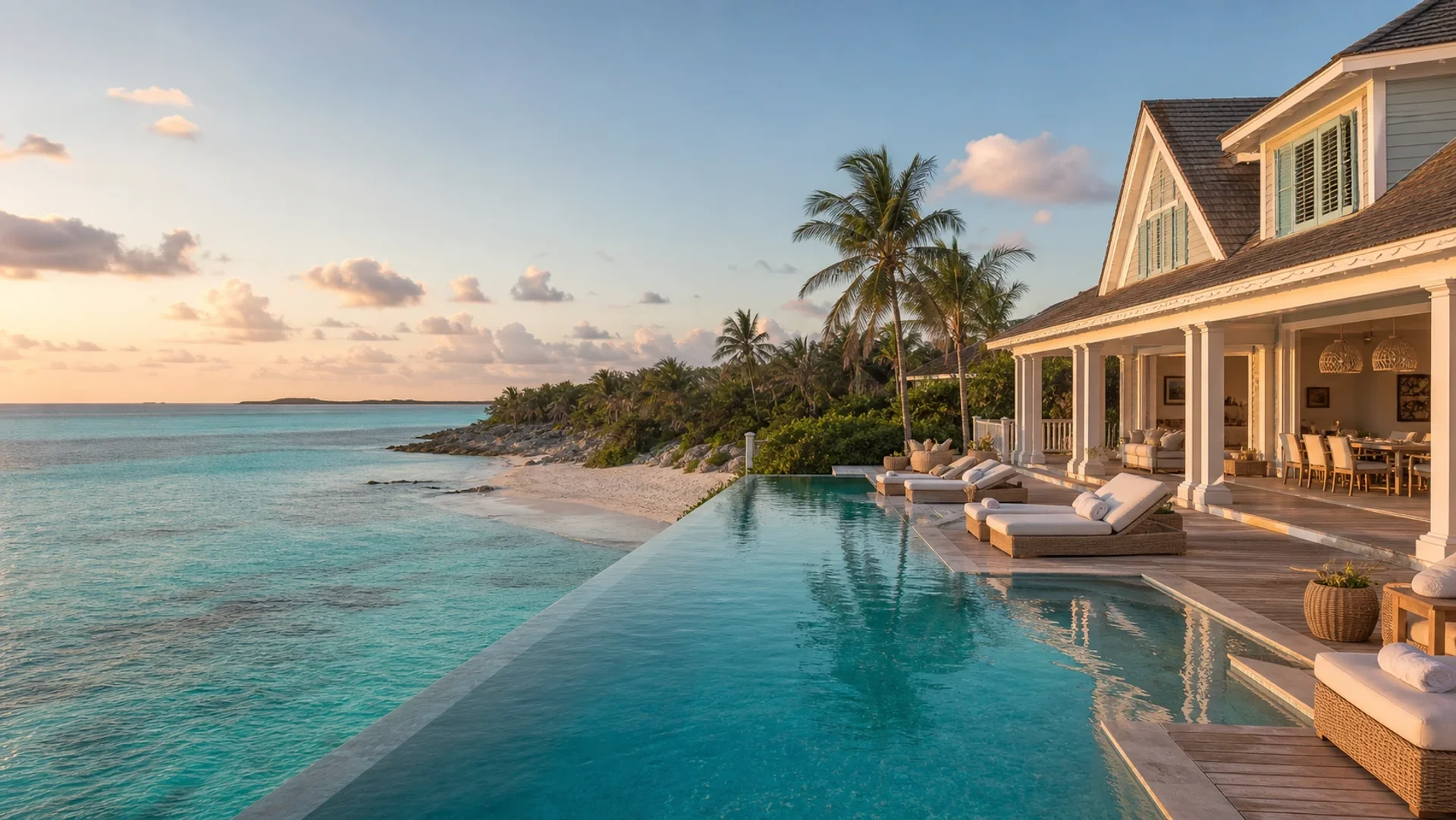
Bahamas · Caribbean
Custom Bali Furniture for Bahamas
Delivered door to door from our workshop in Kerobokan, Bali. 35 to 45 days transit.
Bahamas, Caribbean
The market
The Bahamas luxury hospitality market spans two distinct segments: large resort properties on Nassau and Paradise Island (Atlantis, Baha Mar, Rosewood, Four Seasons Ocean Club), and ultra-exclusive private island leases in the Exumas (Musha Cay, Cave Cay, private celebrity-owned cays). The Exumas segment has grown significantly in the past decade, driven by ultra-high-net-worth ownership of small private islands. Furniture procurement varies dramatically: large Nassau resorts work with international FF&E procurement firms, while Exumas private islands rely on bespoke villa renovation projects often coordinated by Florida or New York-based designers.
Shipping & logistics
From Bali to Bahamas, the practical details.
- Transit time
- 35 to 45 days
- Departure port
- Benoa, Bali
- Arrival port
- Nassau (New Providence)
- Standard incoterms
- CIF Nassau
- Furniture import duty
- 30 to 35% on furniture (Bahamas customs duty rates)
- VAT / local tax
- 10% Bahamas VAT applies on landed value
Container shipments arrive at Nassau, the primary international port, then transfer to Exumas destinations via local inter-island barge or charter vessel. The Exumas chain spans 365 islands across 130 miles, so domestic transit to specific cays adds 2 to 7 days depending on destination. Nassau customs is well-established with multiple competent local brokers; Exumas private islands often have dedicated logistics arrangements through their management companies.
Customs & import notes
Bahamas customs duty for furniture is among the higher Caribbean rates, typically 30 to 35% on most furniture HS codes. Additional fees include a 1% customs processing fee (minimum $10, maximum $750) and potential environmental levy depending on item category. Standard 10% Bahamas VAT applies on the duty-inclusive landed value. The combined effective rate often exceeds 45% of CIF value, making customs cost a significant component of project cost. SVLK timber legality certificate required. Documentation requirements include Commercial Invoice, Packing List, Bill of Lading, Certificate of Origin, and Phytosanitary Certificate for natural fibres.
Climate considerations
Tropical maritime, 21 to 32°C, with Atlantic hurricane season June to November and intense salt-air exposure on private islands.
- Tropical maritime climate, 21 to 32°C with hurricane season June to November affecting both Atlantic-facing and protected island locations
- UV index 11 to 13 in summer; salt-air exposure on Exumas private islands often constant given small island sizes
- Hurricane-grade structural specifications mandatory for direct Atlantic exposure
- Trade winds and tropical storms accelerate timber patination
Recommended materials for Bahamas
A-Grade Plantation Teak (hurricane-rated outdoor)
Teak is the primary material for Bahamas outdoor furniture. The hurricane season (June to November) and direct Atlantic exposure require storm-rated specifications. A-grade plantation teak with structural joinery handles the conditions; we provide hurricane-prep guidance and post-storm refurbishment protocols.
Reclaimed Teak (statement pieces)
Reclaimed teak aligns aesthetically with the colonial heritage architectural elements common in Nassau and traditional Bahamian villa design. Statement dining tables, lobby installations, library shelving, custom doors.
Volcanic Stone (Paras), indoor
Paras stone for resort and villa interiors: bathroom basins, kitchen counters, lobby reception desks, statement dining tables. AC-conditioned environments suit the material well.
Why Balinese furniture works for the Bahamas
The case for Bali sourcing in the Bahamas is primarily aesthetic and material rather than cost-driven. With customs duty above 30%, the Bali advantage versus European alternatives is reduced compared to lower-duty destinations.
However, Indonesian teak’s hurricane-resistance and salt-air durability remain unmatched in this price range. For Bahamas resort projects where material authenticity, project scale, and craft consistency matter, Bali sourcing remains compelling.
For ultra-premium private island projects in the Exumas, the small project size relative to total villa investment makes the customs cost a manageable fraction of overall project economics. We coordinate the inter-island transit phase with logistics partners experienced in private cay deliveries across the 365-island chain.
What a typical Bahamas-Exumas hospitality project would include
Bahamas projects fall into two operationally distinct categories. A Nassau or Paradise Island resort commission (often part of a larger international chain renovation, 100+ keys) would typically involve substantial standardised bedroom FF&E, restaurant interiors, and pool-deck furniture across multiple property zones, often coordinated through international FF&E procurement firms with detailed specification packages. An Exumas private island villa commission (4 to 12 bedrooms, occasionally with detached guest pavilions) would typically include indoor and outdoor dining, lounge furniture, master and guest bedrooms, pool-deck pieces, and sometimes architectural elements such as built-in banquettes or library walls, scoped to fit either a 20ft or 40ft container depending on volume. Exumas projects are commonly coordinated through Florida or New York-based designers.
Furniture considerations for Bahamas-Exumas climate
Build for permanent salt loading on private cay properties. The Exumas chain consists of small, low-elevation islands with no inland buffer from Atlantic and Caribbean salt exposure. Even properties set back from the immediate beach face year-round salt-air loading. Specify lacquered brass and marine-grade stainless throughout the property; raw iron, mild steel, or plated hardware will not hold finish past the first 12 to 18 months.
Engineer to hurricane-rated structural specifications. The Atlantic hurricane season runs June to November, and the Bahamas has historically experienced Category 4 to 5 events including Hurricane Dorian (2019). A-grade plantation teak with structural mortise-and-tenon joinery and brass hardware survives major events with cosmetic rather than structural damage; lighter or rigid-construction outdoor furniture does not. Owners should plan for pre-storm indoor storage or anchored installation for any pieces left outside during hurricane watches.
Specify against UV-driven degradation in synthetic and unprotected materials. Peak UV in Bahamian summer reaches index 11 to 13, intense enough to degrade synthetic rattan within a single season and to bleach untreated natural fibres within 1 to 2 seasons. UV-coated rattan and oiled or sealed teak are the practical defaults for any outdoor or semi-outdoor placement; the maintenance overhead of unprotected materials in this UV envelope rarely justifies the small upfront saving.
Buyer checklist for Bahamas-Exumas projects
- Plan around the June-to-November hurricane season. Inter-island barge to specific cays can be delayed by named storms. Build in a buffer for hard opening dates and target a December-to-May window for high-stakes installations where possible.
- Coordinate with the Nassau-based customs broker and the Exumas-experienced logistics partner before container loading. The two-stage process (Nassau clearance plus inter-island transfer) requires advance scheduling, particularly for cays without dedicated dock infrastructure.
- Confirm dock access at the destination cay before scoping large pieces. Some private islands have dedicated docks rated for delivery barges; others depend on public docks at Georgetown or Staniel Cay with onward small-vessel transfer.
- For multi-cay or multi-property orders, sequence the delivery so each cay’s installation crew completes one phase before the next container leg arrives. Storage on small private islands is typically very limited.
- Verify SVLK timber certificate, phytosanitary certificate for natural-fibre pieces, and other documentation requirements with your customs broker before shipment to avoid clearance delays at Nassau.
Questions about Bahamas delivery
How do customs duties work for furniture imported to the Bahamas?
Bahamas customs duty for furniture is typically 30 to 35% depending on HS classification, plus a 1% processing fee and 10% VAT calculated on the duty-inclusive landed value. The combined effective rate is approximately 45 to 50% of CIF value. We work with experienced Nassau-based customs brokers who provide upfront landed cost calculations before shipment.
How does delivery to Exumas private islands work?
Container shipments arrive at Nassau, then transfer to specific Exumas destinations via inter-island barge or charter vessel. Total transit including final-mile to a specific cay is 35 to 50 days from Benoa. Many Exumas private islands have dedicated management companies that coordinate the domestic transit phase. We work with local logistics partners experienced in Exumas private island deliveries.
Can your furniture handle Atlantic hurricane exposure?
Yes. A-grade plantation teak with proper structural joinery (mortise and tenon, brass hardware) survives Category 3 to 4 hurricanes with minor cosmetic damage. We provide hurricane-rated specifications for properties in direct Atlantic exposure zones, including pre-storm storage recommendations and post-storm refurbishment protocols.
Do you work with U.S.-based interior designers on Bahamas projects?
Yes. Ubud Atelier works with Miami-based, New York-based and Atlanta-based interior designers and architects managing resort and villa projects. We work with technical drawings, AutoCAD files, and material specifications in English, provide CAD-ready content for designer renderings, and dispatch material samples to U.S. design studios for projects above €50,000.
Have a project in Bahamas?
Tell us your scope, timeline and destination. We confirm logistics and capacity within 48 hours.