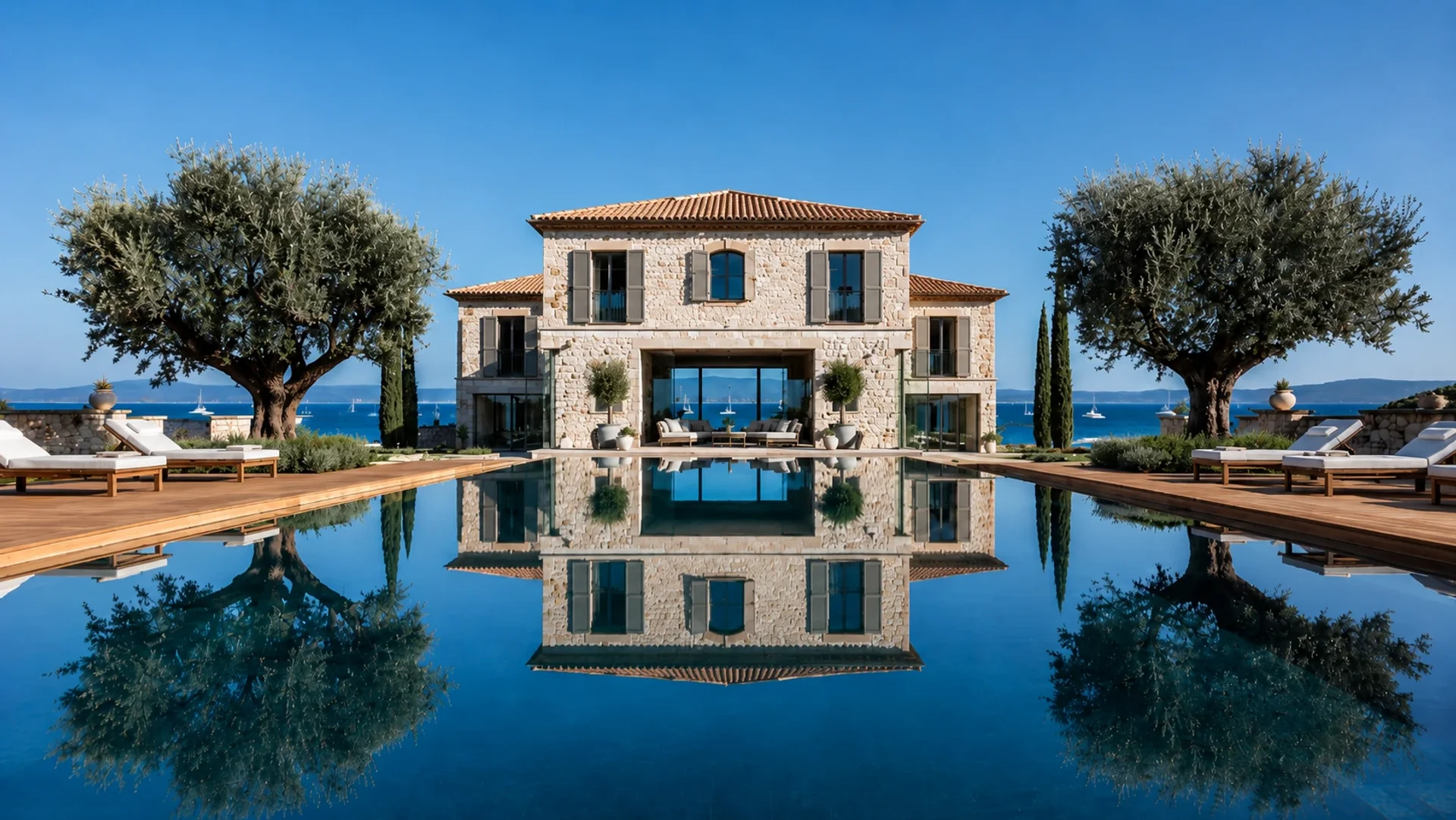
France · Mediterranean
Custom Bali Furniture for Côte d’Azur
Delivered door to door from our workshop in Kerobokan, Bali. 25 to 35 days transit.
France, Mediterranean
The market
The Côte d’Azur is among Europe's most established and competitive luxury hospitality markets, spanning approximately 100 kilometers from Saint-Tropez (Var) through Cannes, Antibes, Nice, Saint-Jean-Cap-Ferrat, Monaco, and Menton. The corridor hosts more than 80 luxury hotel properties (Hotel du Cap-Eden-Roc, Grand-Hôtel du Cap-Ferrat, La Réserve, Hôtel Byblos, Cheval Blanc Saint-Tropez) and several thousand private villas. Rental rates exceed €50,000 per week in peak season for premium properties, and ownership is dominated by ultra-high-net-worth individuals from across Europe, the Middle East, and North America. The market has shown sustained growth with new boutique villa developments in the hinterland (Mougins, Grasse, Vence) extending the traditional coastal cluster.
Shipping & logistics
From Bali to Côte d’Azur, the practical details.
- Transit time
- 25 to 35 days
- Departure port
- Benoa, Bali
- Arrival port
- Marseille (Fos-sur-Mer Terminal) or Nice (limited capacity)
- Standard incoterms
- CIF Marseille
- Furniture import duty
- 0% under EU GSP+ (Indonesia is GSP+ beneficiary) for most wood furniture HS codes, estimate to confirm by HS classification
- VAT / local tax
- 20% French TVA applies on duty-inclusive value
Direct services from Benoa to Marseille operate via Suez Canal routing, 25 to 35 days transit. Marseille (Fos-sur-Mer) is France's primary Mediterranean container port and handles major furniture cargo for Côte d’Azur distribution. From Marseille, road transit to Saint-Tropez area is 2.5 hours, to Cannes/Antibes 2 hours, to Nice/Monaco 2.5 hours. Final-mile delivery to specific villa addresses uses standard road transport, with potential challenges for properties on narrow village roads (Old Town Saint-Tropez, Èze Village).
Customs & import notes
The European Union has Generalized Scheme of Preferences Plus (GSP+) status with Indonesia, providing 0% customs duty on most wood furniture HS codes when properly documented (estimate to confirm by HS classification). Some specific furniture categories may carry residual duties of 2.7% to 5.6% under standard EU TARIC; this should be verified with HS classification before shipment. Standard 20% French TVA (VAT) applies on the duty-inclusive landed value. SVLK Indonesian timber legality certificate is required and is recognized by EU customs as compliant with EUTR. Documentation in English is accepted; French translations may facilitate clearance.
Climate considerations
Mediterranean with hot dry summers (28 to 32°C) and mild wet winters (8 to 15°C). UV is intense in July to August; Mistral wind events in autumn and winter can stress outdoor furniture.
- Mediterranean, hot dry summers (28 to 32°C) and mild wet winters (8 to 15°C)
- UV index 9 to 10 in summer, 4 to 6 in winter
- Mistral wind events in autumn and winter can stress outdoor furniture, secured installation recommended
- Salt-air exposure varies by villa location, direct Mediterranean coast (Cap d'Antibes) higher than inland (Mougins, Grasse)
Recommended materials for Côte d’Azur
A-Grade Plantation Teak (Mediterranean outdoor)
Teak performs excellently in Côte d’Azur conditions. The Mediterranean climate (28 to 32°C summers, 8 to 15°C winters) is well-suited to teak's natural properties; UV exposure is intense in July to August (9 to 10 index) but absence of constant rain or salt spray means lower maintenance than tropical applications. Pool decks, terrace dining sets, beach club furniture for Pampelonne and similar coast clubs. The silver-grey weathered patina is widely accepted in French Riviera design.
Reclaimed Teak (statement pieces)
Reclaimed teak's heritage character resonates strongly with Provençal design culture, which values authenticity and material provenance. Statement dining tables, lobby installations, library shelving, custom bar fronts in resort F&B environments. Pairs naturally with traditional limestone and terracotta materials.
Natural Rattan (covered outdoor & indoor)
Rattan suits Mediterranean covered terrace and indoor applications well. Lounge seating, partition screens, hanging chairs in shaded courtyards and ground-floor terraces. The traditional Provençal design language has historical use of natural fibres, where Indonesian rattan provides modern manufacturing consistency at hospitality project scale.
Why Balinese furniture works for the Côte d’Azur
The Côte d’Azur’s hospitality vocabulary carries an unusually deep heritage layer, Belle Epoque palaces and villas (Cap Ferrat, Cap d’Antibes, Saint-Jean-Cap-Ferrat) alongside contemporary tropical-modern hotels (Saint-Tropez, Eze, Roquebrune-Cap-Martin), all set within Mediterranean limestone, noble timber, and patinated ironwork. Bali’s craft tradition speaks the contemporary register directly through structural teak and woven natural fibres, and aligns with the heritage palette through reclaimed teak, carved detail, and traditional finishes at hospitality scale.
The operational case sits alongside the aesthetic. A Côte d’Azur hospitality project would typically need to coordinate premium European contract furniture (Italian or French contract production at very high price points for semi-custom work) with rare and costly French artisan craft. A single Bali workshop with full-scope custom capability eliminates that multi-source coordination, delivers piece-to-piece consistency, and offers customisation depth on the Mediterranean material palette (carved hardwoods, sophisticated finishes, woven rattan) that European contract production rarely matches at hospitality volume.
What a typical Côte d’Azur hospitality project would include
Côte d’Azur projects fall across an unusually broad spectrum of property types. A Cap Ferrat or Cap d’Antibes private villa (often 8 to 15 bedrooms with separate guest pavilions, gym, and entertainment spaces) would typically involve substantial indoor and outdoor dining, multiple lounge zones, full bedroom suites, and pool and beach-deck furniture sized for entertaining at scale. A Saint-Tropez peninsula villa (4 to 10 bedrooms) would scale these volumes down by roughly half but emphasise the outdoor entertaining envelope. A historic boutique hotel commission in the Eden Roc or La Réserve aesthetic would typically include bedroom FF&E, restaurant interiors, and terrace pieces specified to integrate with the property’s existing classical or modernist character.
Furniture considerations for Côte d’Azur climate
Anchor and weight outdoor pieces against the mistral. Autumn and winter mistral events bring sustained 60 to 80 km/h gusts, especially around Cap d’Antibes and the Saint-Tropez peninsula. Specify heavy teak or stone frames for any furniture left outdoors year-round, and confirm anchor points or weighting solutions for parasols and lighter accessories. Lightweight aluminium furniture popular in some Mediterranean markets does not survive a single winter mistral season.
Match aesthetic to historic-property classification rules. Several premier Côte d’Azur properties hold protected status under the Monuments Historiques framework or Cap Ferrat conservation rules. Classified properties may restrict modern high-gloss or lacquered finishes on visible interior pieces. Reclaimed teak, hand-rubbed oil finishes, and natural matte tones generally pass review more easily than contemporary lacquered or chrome-accented designs.
Specify lacquered brass and marine-grade stainless for hardware near sea-facing terraces. The Cap Ferrat and Cap d’Antibes coastline experiences moderate continuous salt exposure, particularly in the November to March storm season. Lacquered brass holds finish for 5 to 7 years, and marine-grade stainless screws and hinges resist the green corrosion that affects standard plated hardware within 18 months.
Buyer checklist for Côte d’Azur projects
- Confirm Marseille customs slot timing with your broker. The Fos-sur-Mer terminal handles high volumes year-round, but specific carrier rotations can add 3 to 5 days to estimated arrival.
- For Cap Ferrat, Cap d’Antibes, and Saint-Tropez peninsula villas, verify whether the property has private port or beach-launch access. Several premier estates can receive deliveries by tender, bypassing road congestion entirely.
- Plan for July and August road traffic delays. The corniche routes between Saint-Tropez, Cannes, and Nice slow materially during peak season; a delivery scheduled for a Saturday in August should add a half-day buffer.
- Verify historic-property permit requirements before delivery. If the project includes structural elements (built-in banquettes, library walls, classical mouldings), Monuments Historiques approval can add 6 to 12 weeks.
- Engage a Provence-based freight forwarder for Saint-Tropez old town deliveries. The access restrictions and small-vehicle final-mile requirements are not standard Marseille-port skills.
Questions about Côte d’Azur delivery
Are EU customs duties really 0% on Bali furniture imports to France?
For most wood furniture HS codes, yes, under the EU's GSP+ status with Indonesia (estimate to confirm by HS classification). Some specific categories may carry residual duties of 2.7 to 5.6% under standard EU TARIC. The dominant cost is the 20% French TVA on the duty-inclusive landed value. We provide HS classification confirmation and customs cost projection before each shipment.
How does delivery to Saint-Tropez work in peak summer when access is restricted?
Containers arrive at Marseille (Fos-sur-Mer Terminal), then road transit to Saint-Tropez (2.5 hours). Saint-Tropez old town has summer access restrictions on certain streets, which may require small-vehicle final-mile delivery or off-peak (early morning) scheduling. We coordinate with experienced Provence-based logistics partners for villa access planning, particularly for properties in Pampelonne or hilltop locations.
Can your furniture handle Mediterranean summer UV and Mistral winds?
Yes. Mediterranean UV exposure (peak 9 to 10 index in July to August) is comparable to or lower than Indonesian tropical UV. A-grade plantation teak handles the conditions without chemical preservation. The Mistral wind (occasional in autumn/winter) requires secured installation for outdoor furniture but doesn't affect material integrity. We provide installation guidance for wind-prone properties.
Do you work with French interior designers and architects?
Yes. Ubud Atelier works with Paris-based and Marseille-based interior designers and architects managing villa renovations and boutique hotel projects. We work with technical drawings (DWG, PDF) in metric measurements, provide material specifications in English with French translations available, and dispatch material samples to French design studios for projects above €50,000.
Have a project in Côte d’Azur?
Tell us your scope, timeline and destination. We confirm logistics and capacity within 48 hours.