India · South Asia
Custom Bali Furniture for Goa
Delivered door to door from our workshop in Kerobokan, Bali. 10 to 14 days transit.
India, South Asia
The market
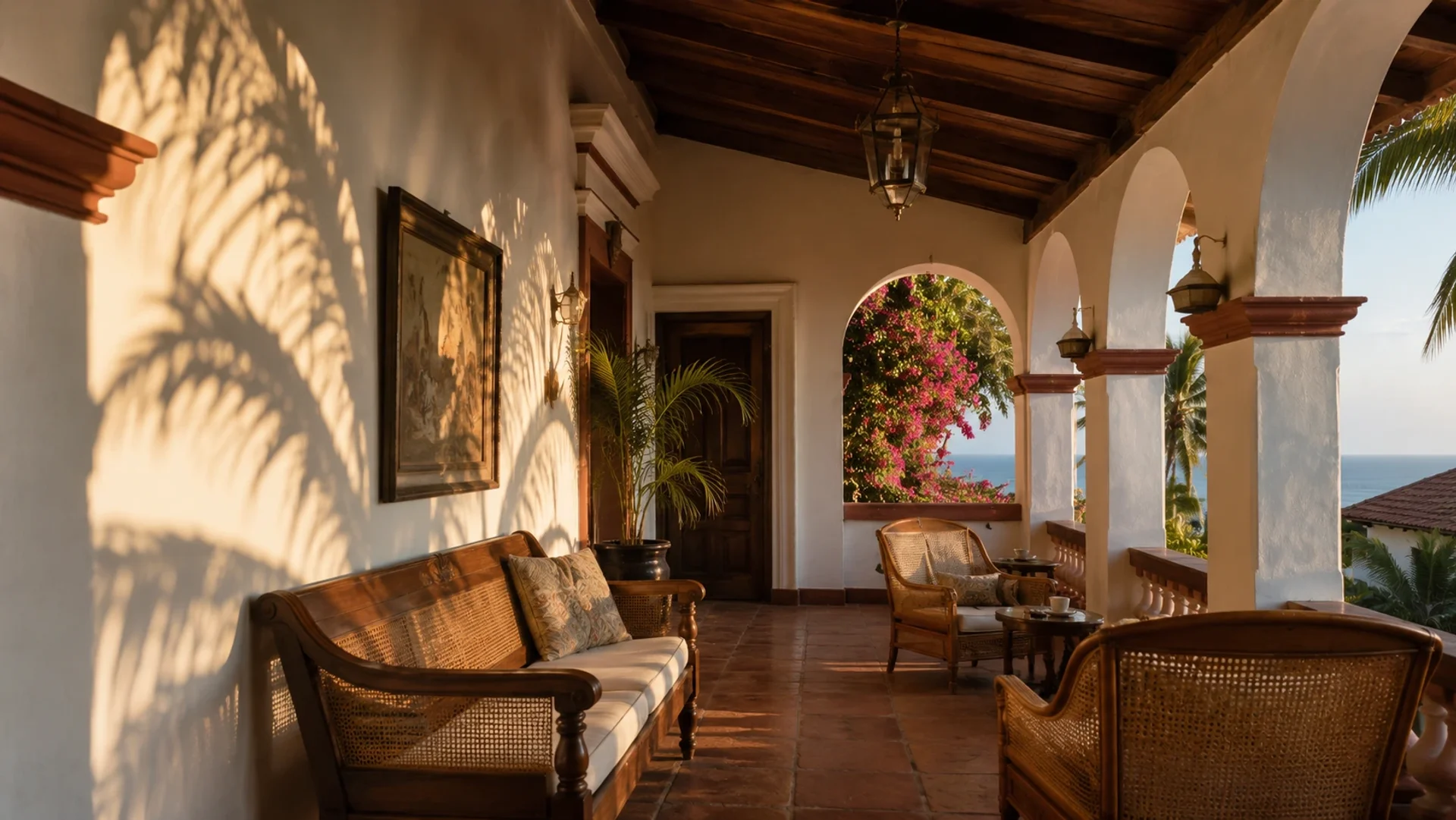
Goa is India's premium domestic and international beach destination, anchored by Taj Exotica Resort, Park Hyatt, Grand Hyatt Goa, ITC Grand Goa, and an emerging boutique villa segment along the northern coastline (Ashvem, Morjim, Arambol). The state hosts approximately 20 luxury resort properties plus a substantial private villa rental market. Goa's distinctive Portuguese-Indian heritage architecture creates demand for materials and design language that bridges colonial heritage and modern hospitality. The boutique segment has expanded approximately 25% over the past five years, driven by Mumbai and Delhi-based luxury operators developing properties for high-net-worth domestic clientele.
Shipping & logistics
From Bali to Goa, the practical details.
- Transit time
- 10 to 14 days
- Departure port
- Benoa, Bali
- Arrival port
- Mormugao Port, Goa
- Standard incoterms
- CIF Mormugao
- Furniture import duty
- 25 to 30% Basic Customs Duty (BCD), estimate to confirm with broker
- VAT / local tax
- 18% IGST on duty-inclusive value, plus 10% Social Welfare Surcharge on BCD
Direct services from Benoa to Mormugao are available via Colombo or Singapore transshipment. Mormugao Port is Goa's primary container facility and handles all major hospitality cargo. From Mormugao, road transit to North Goa beach destinations (45 minutes to 90 minutes) is straightforward via NH-66. Indian customs procedures are well-established but multi-layered (BCD + IGST + SWS), requiring experienced freight forwarders.
Customs & import notes
India customs duty for furniture is among the higher rates in our destination network, typically 25 to 30% Basic Customs Duty depending on HS classification (estimate to confirm with broker). Additional fees include 10% Social Welfare Surcharge calculated on the BCD amount, plus 18% IGST (Integrated GST) on the duty-inclusive landed value. The combined effective rate often exceeds 50% of CIF value, making customs cost a significant component of project economics. SVLK Indonesian timber legality certificate required. Documentation requirements include detailed HS code classification (Chapter 94 for furniture). India does not have an FTA with Indonesia that would reduce furniture duty.
Climate considerations
Tropical with two distinct seasons (dry October to May 25 to 35°C, wet June to September 22 to 30°C with heavy monsoon). Salt-air exposure is moderate on direct coast, lower inland.
- Tropical, two distinct seasons (dry October to May 25 to 35°C, wet June to September 22 to 30°C with heavy monsoon)
- UV index 10 to 12 in summer, 7 to 9 in winter
- Salt-air exposure on direct coastal properties is moderate, some inland boutique villas have lower exposure
- Monsoon season may delay deliveries, factor 1 to 2 week buffer for June to September arrivals
Recommended materials for Goa
A-Grade Plantation Teak (full outdoor)
Teak performs excellently in Goa's tropical climate. The Arabian Sea exposure and South Asian monsoon system (June to September) create demanding conditions that A-grade plantation teak handles natively. Pool decks, beachfront loungers, restaurant terraces. India has its own teak traditions, but Indonesian sources deliver hospitality-grade volume and consistent specifications.
Reclaimed Teak (statement pieces)
Reclaimed teak aligns aesthetically with Goa's Portuguese colonial heritage, where 19th-century timber resonates with the architectural language. Statement dining tables, custom doors, lobby installations, library shelving. The provenance story complements Goa's villa renovation projects that often work with original colonial structures.
Natural Rattan (covered outdoor & indoor)
Rattan thrives in Goa's tropical climate when kept under cover. Verandas, breakfast pavilions, lounge seating in shaded areas. India has its own rattan craft traditions, but Indonesian sources can deliver hospitality-grade volume for resort-scale projects.
Why Balinese furniture works for Goa
Goa’s hospitality vocabulary carries an unusual layered complexity, Portuguese colonial heritage architecture (Old Goa churches, restored mansion houses, fort settings) interleaved with contemporary boutique hotel design (North Goa) and established luxury resort positioning (South Goa). Bali’s craft tradition speaks each register, reclaimed teak and carved detail aligned with the colonial heritage palette, structural plantation teak and woven rattan aligned with contemporary tropical-resort positioning.
The operational case sits alongside the aesthetic. A boutique design hotel in North Goa or a resort commission in South Goa would typically need to coordinate FF&E across multiple regional suppliers (Indian contract production, Indonesian rattan workshops, Southeast Asian reclaimed timber) to assemble a full property fit-out. A single Bali workshop with full-scope capability covers both heritage and contemporary specifications under one production roof. The piece-to-piece consistency advantage matters particularly for boutique projects where guest-level inspection at close range is the operating norm.
What a typical Goa hospitality project would include
A Goa hospitality project would typically take one of three shapes. A South Goa beachfront resort commission (40 to 100 keys at the Taj Exotica, Park Hyatt, Alila Diwa, or W Goa scale, concentrated on Cavelossim, Palolem, and Agonda) would usually involve repeated bedroom FF&E, restaurant and bar fit-outs, and pool-deck and beach pieces. A North Goa boutique design hotel commission (10 to 30 keys, often in renovated Portuguese houses or boutique new-build properties on Anjuna, Vagator, Morjim, or Assagao) would carry a tighter aesthetic vocabulary and scope a smaller container per project. A heritage Portuguese villa restoration or an Old Goa boutique guesthouse conversion would emphasise conservation alignment and reclaimed material palette over volume.
Furniture considerations for Goa climate
Treat the June-to-September monsoon as a hospitality off-season, not a delivery window. The Goa monsoon is among the most intense in the destination network, with heavy rainfall, rough sea conditions, and operational shutdown across much of the resort segment. Outdoor installation work between June and September is materially harder than other months, and several luxury resorts close or run reduced operations during the period. Schedule install windows for October to May where the project allows; June-to-September deliveries should anticipate slower clearance and finishing work.
Match material vocabulary to the Portuguese heritage where the project is in heritage context. Old Goa, the Latin Quarter of Panjim (Fontainhas), and several restored mansion-house boutique properties carry conservation expectations or aesthetic alignment requirements that favour reclaimed teak, carved detail, and traditional finishes over contemporary lacquered or high-gloss treatments. The brief should specify whether the project sits in heritage context at design stage rather than discover the constraint after production.
Specify salt-resistant hardware for direct coastal placement, lighter spec inland. Goa’s coastal Arabian Sea exposure carries moderate-to-high salt loading on beachfront properties (Cavelossim, Palolem, Agonda, Morjim, Vagator) and lower exposure on inland boutique properties (Assagao, Old Goa, Fontainhas). Lacquered brass and marine-grade stainless are the durable defaults for direct coastal pieces; standard solid brass or oxidised iron is acceptable on inland properties more than 2 km from shore.
Buyer checklist for Goa projects
- Plan against the June-to-September monsoon. The window is materially harder for outdoor installation than other months and several resorts run reduced operations. Schedule major install work for October to May where possible.
- Coordinate Mormugao Port clearance with your customs broker before container loading. Indian customs procedures are multi-layered and require detailed HS classification.
- For very large volumes, consider Mumbai Port plus 12 to 14 hour road haul as an alternative to Mormugao. The choice has clearance-window and road-haul timing implications.
- Confirm final-mile vehicle access for inland and Old Goa heritage properties. Several boutique villa approaches and old-quarter streets are reached via narrow access roads requiring smaller delivery vehicles.
- For heritage and Portuguese-context properties, lock the material and finish vocabulary at design stage. Reclaimed and carved finishes generally pass aesthetic review more easily than contemporary lacquered treatments.
- Build a 1 to 2 week schedule buffer into June-to-September deliveries. Monsoon delays on the road-haul leg from Mormugao are common during peak rainfall.
Questions about Goa delivery
How do customs duties work for furniture imported to Goa?
India customs structure is multi-layered: 25 to 30% Basic Customs Duty on the CIF value, 10% Social Welfare Surcharge calculated on the BCD amount, and 18% IGST on the duty-inclusive landed value (estimate to confirm with broker). Combined effective rate is approximately 50 to 55% of CIF. We work with experienced Mormugao-based customs brokers who provide upfront landed cost calculations.
Can your furniture handle Goa's monsoon season?
Yes. A-grade plantation teak performs identically in Bali and Goa conditions, both face the same South Asian monsoon system (June to September). The material handles heavy rain, salt air, and high humidity without chemical preservation. Properly oiled teak retains its golden tone; the silver-grey weathered patina is also widely accepted in Goan boutique design.
Why source from Bali if customs are this high?
For boutique projects where material quality, craft consistency, and design alignment matter more than the last 20% of cost optimization. Indian customs are unavoidable for any imported furniture (other countries face the same rates). The decision is whether to use Indian domestic furniture or import from Asia. For hospitality-grade specifications and aesthetic alignment with Portuguese colonial heritage, Bali sourcing delivers value despite the customs friction.
Do you work with Indian boutique hospitality groups?
Yes. Our logistics network serves Goa boutique resort projects, working with Mumbai-based and Delhi-based interior design firms managing villa renovations and new builds. Standard project flow is 18 to 20 weeks total from brief to on-site delivery, factoring in the longer customs clearance window typical of Indian customs procedures.
Have a project in Goa?
Tell us your scope, timeline and destination. We confirm logistics and capacity within 48 hours.