Malaysia · Southeast Asia
Custom Bali Furniture for Langkawi
Delivered door to door from our workshop in Kerobokan, Bali. 4 to 7 days transit.
Malaysia, Southeast Asia
The market
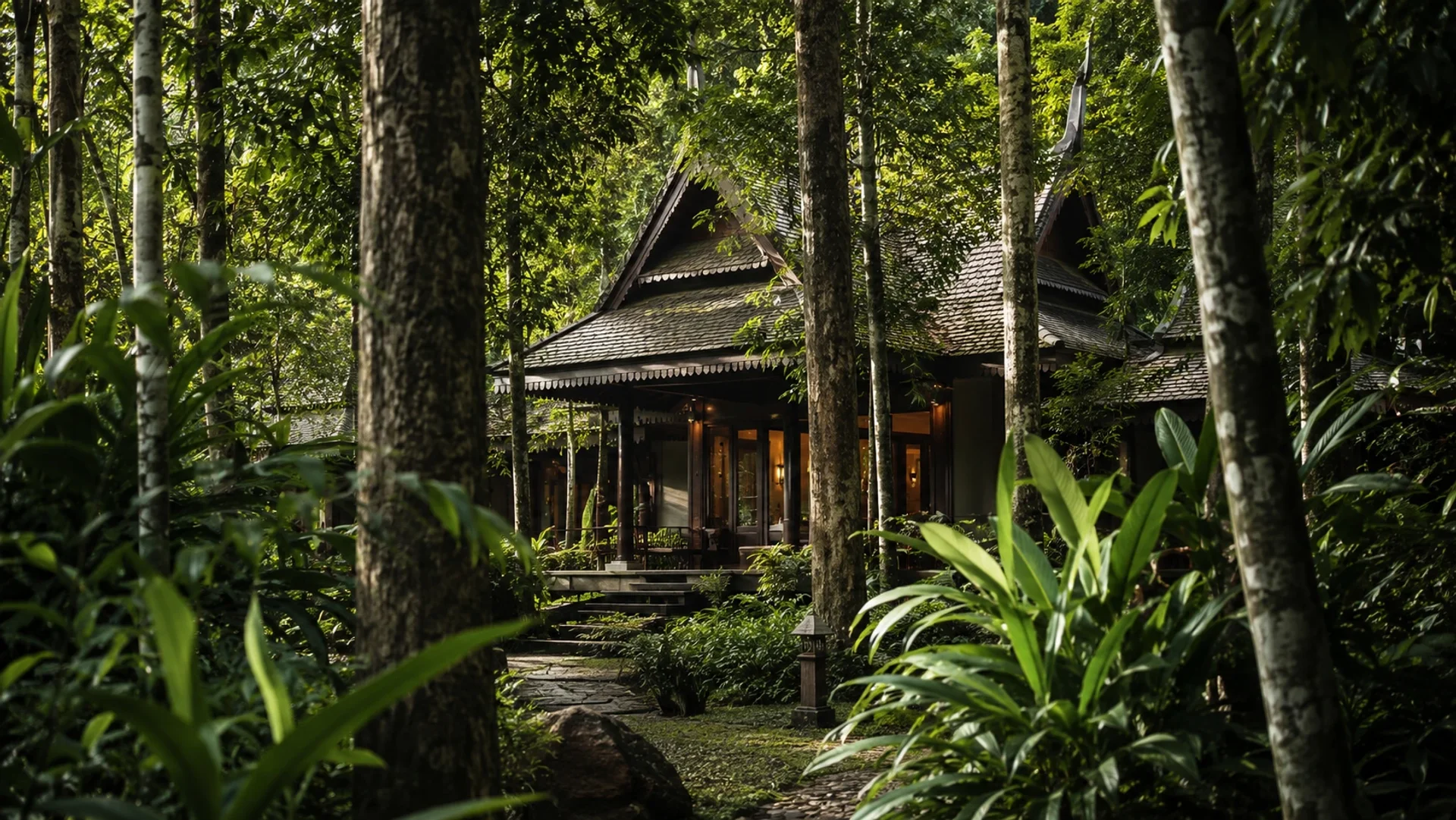
Langkawi is Malaysia's flagship luxury hospitality island, hosting approximately 25 luxury resort properties anchored by The Datai, Four Seasons Langkawi, The St. Regis, Pelangi Beach Resort, and the ultra-premium private villa market. The 99-island UNESCO Geopark archipelago combines pristine rainforest with Andaman Sea beachfront, creating distinctive resort positioning that differentiates Langkawi from other Malaysian destinations. Hotel pipeline expansion is moderate but consistently focused on the high-end segment, with new boutique villa developments along the northern coastline (Datai Bay, Tanjung Rhu) and emerging properties in the geopark zones. Furniture specification emphasizes the rainforest-meets-beach aesthetic with natural materials and indoor-outdoor design.
Shipping & logistics
From Bali to Langkawi, the practical details.
- Transit time
- 4 to 7 days
- Departure port
- Benoa, Bali
- Arrival port
- Penang Port, then domestic transit to Langkawi via inter-island vessel
- Standard incoterms
- CIF Penang
- Furniture import duty
- 0% under ASEAN AFTA (with Form D Certificate of Origin)
- VAT / local tax
- 6% to 8% Malaysia SST (Sales and Service Tax) applies on duty-inclusive value
Direct services from Benoa to Penang are available across major carrier networks. Indonesia and Malaysia are both ASEAN founding members, eligible for zero-duty treatment under ATIGA provided Form D Certificate of Origin. Langkawi has a port (Kuah) but limited container capacity, so most furniture shipments transit through Penang first (mainland Malaysia), then inter-island vessel to Langkawi (3 to 5 hours). Total Bali-to-Langkawi timing is 5 to 9 days including inter-island transfer.
Customs & import notes
Malaysia customs duty for furniture sourced from Indonesia is 0% under the ASEAN Free Trade Area with Form D documentation. Malaysia operates Sales and Service Tax (SST) at 6% on most goods, with higher 8% rates on specific service categories. SST applies on the duty-inclusive landed value. SVLK Indonesian timber legality certificate required. Malaysia customs has well-established procedures and experienced Penang-based brokers handle hospitality cargo efficiently.
Climate considerations
Tropical, hot and humid year-round (28 to 32°C) with monsoon September to October. Climate is nearly identical to Bali, so material performance translates without adjustment.
- Tropical, hot and humid year-round (28 to 32°C), monsoon September to October with heaviest rainfall
- UV index 10 to 12 year-round, very intense
- Annual relative humidity 75 to 90%, identical to Indonesian conditions, material performance translates directly
- Rainforest microclimates on northern coast (Datai Bay) provide naturally protected installations
Recommended materials for Langkawi
A-Grade Plantation Teak (full outdoor)
Teak handles Langkawi conditions identically to Indonesian conditions. Both face the same Andaman Sea environment with high humidity, monsoon rain, and intense UV. A-grade plantation teak provides 25 to 30 years of outdoor performance without chemical preservation. Pool decks, beachfront loungers, restaurant terraces, beach club furniture.
Natural Rattan (covered outdoor & indoor)
Rattan thrives in Langkawi's tropical climate when kept under cover. Resort villa interiors, breakfast pavilions, lounge seating in covered terraces. The rainforest setting of Datai Bay and similar resorts creates ideal protected microclimates for rattan applications.
Reclaimed Teak (statement pieces)
Reclaimed teak's heritage character aligns with Malaysian luxury hospitality's preference for materials with depth and provenance. Statement dining tables, lobby installations, custom bar fronts in resort F&B environments.
Why Balinese furniture works for Langkawi
Langkawi’s design language has stabilised on a rainforest-meets-beach vocabulary that spans the resort segment, structural teak and locally rooted natural fibres set against rainforest canopy and Andaman Sea panoramas. Bali’s craft tradition produces exactly that vocabulary at hospitality scale, the alignment with The Datai, Four Seasons Langkawi, and the broader UNESCO Geopark resort positioning is direct rather than approximate.
The operational case sits alongside the aesthetic. A resort or villa commission in Langkawi would typically need to coordinate FF&E across regional suppliers (Malaysian contract production, Indonesian rattan, Vietnamese reclaimed timber). A single Bali workshop with full-scope capability eliminates the multi-source coordination overhead and delivers piece-to-piece consistency that hospitality-grade procurement requires. The proximity (4 to 7 days transit from Benoa to Penang) compounds the logistical advantage, the route is among the shortest in the Ubud Atelier network.
What a typical Langkawi hospitality project would include
A Langkawi hospitality project would almost always be a resort commission (40 to 100 keys at The Datai, The Andaman, Four Seasons, St Regis, or Tanjung Rhu Resort scale), since standalone private villa commissions on the island are rare. Properties cluster on Datai Bay (jungle plus beach), Tanjung Rhu (beach), and Pantai Cenang, each with distinct design language and operational footprint. Scope would typically span repeated bedroom FF&E across all keys, restaurant and bar fit-outs, spa interiors, and pool-deck and beach pieces. Datai-scale projects often add jungle-pavilion and treehouse-style accommodations with distinct material specifications.
Furniture considerations for Langkawi climate
Specify against jungle-pest pressure on rainforest-canopy properties. Datai Bay and similar rainforest-positioned resorts face xylophagous insect activity and ambient humidity that the open beachfront properties largely avoid. Dense old-growth reclaimed teak and properly cured plantation teak resist jungle-pest pressure significantly better than softer hardwoods or untreated bamboo. Where bamboo is specified for architectural or accent elements, factory borate treatment is the practical default.
Differentiate jungle and beachfront piece specifications. Beach properties on Pantai Cenang and Tanjung Rhu face moderate salt loading and direct UV at index 10 to 12. Jungle and rainforest-canopy properties (Datai Bay) face elevated humidity and lower direct UV but higher mold and mildew pressure. Marine-grade hardware and sealed joinery are paired requirements across both, but the emphasis differs, lacquered brass and salt-resistant finishes for beachfront, sealed humidity barriers and ventilation-aware piece geometry for jungle.
Time outdoor installation around the May-to-October southwest monsoon. Langkawi’s monsoon brings sustained rainfall and rougher Andaman sea conditions that disrupt jetty offloads and exposed-terrace finishing work. The November-to-April dry season offers steadier conditions for pool-deck, beach-club, and outdoor finishing work.
Buyer checklist for Langkawi projects
- Plan around the May-to-October southwest monsoon for outdoor work. Schedule pool-deck, beach, and exposed-terrace installation during the November-to-April dry window where possible.
- Coordinate Penang Port clearance plus inter-island ferry timing with your freight forwarder. The 3 to 5 hour Penang-to-Kuah ferry leg has scheduling and capacity constraints worth confirming early.
- Confirm final-mile road access for the destination resort (Datai Bay, Tanjung Rhu, Pantai Cenang). Most resort approaches are straightforward but jungle-canopy properties on the northern coast may require staged offloading.
- Differentiate jungle and beachfront piece specifications at briefing stage. The two microclimates carry distinct material and joinery requirements that affect production planning.
- For UNESCO Geopark sustainability documentation, request FSC chain-of-custody and SVLK certificates upfront in the brief. The Langkawi resort segment expects sustainability documentation as a procurement criterion.
Questions about Langkawi delivery
How does Langkawi being an island affect delivery logistics?
Containers arrive at Penang Port (mainland Malaysia, 4 to 7 days from Benoa), then transfer to inter-island vessel for the 3 to 5 hour transit to Langkawi's Kuah port. Total Bali-to-Langkawi timing is 5 to 9 days. From Kuah, road delivery to specific resort properties (Datai Bay, Tanjung Rhu, Pantai Cenang) is 30 to 60 minutes.
Is Malaysia customs duty really 0% on Bali furniture?
Yes, under the ASEAN Free Trade Area with Form D certification. The dominant cost is Malaysian SST (Sales and Service Tax) at 6% on most goods, applied to the duty-inclusive landed value. Some service categories carry 8% SST. We provide upfront landed cost calculations.
Can your furniture handle Langkawi's rainforest humidity year-round?
Yes. Langkawi's climate is nearly identical to Bali's (high humidity, monsoon rain, intense tropical UV). A-grade plantation teak and properly cured rattan handle these conditions natively. Langkawi's climate is nearly identical to Bali's, so material performance translates directly with no adjustment required.
Do you work with Langkawi's UNESCO Geopark sustainability requirements?
Yes. We provide FSC chain-of-custody certificates for plantation teak, zero-harvest declarations for reclaimed teak, SVLK Indonesian timber legality documentation, and material composition sheets. Our documentation aligns with the Geopark's environmental positioning requirements and meets the standards expected by resort sustainability auditors.
Have a project in Langkawi?
Tell us your scope, timeline and destination. We confirm logistics and capacity within 48 hours.