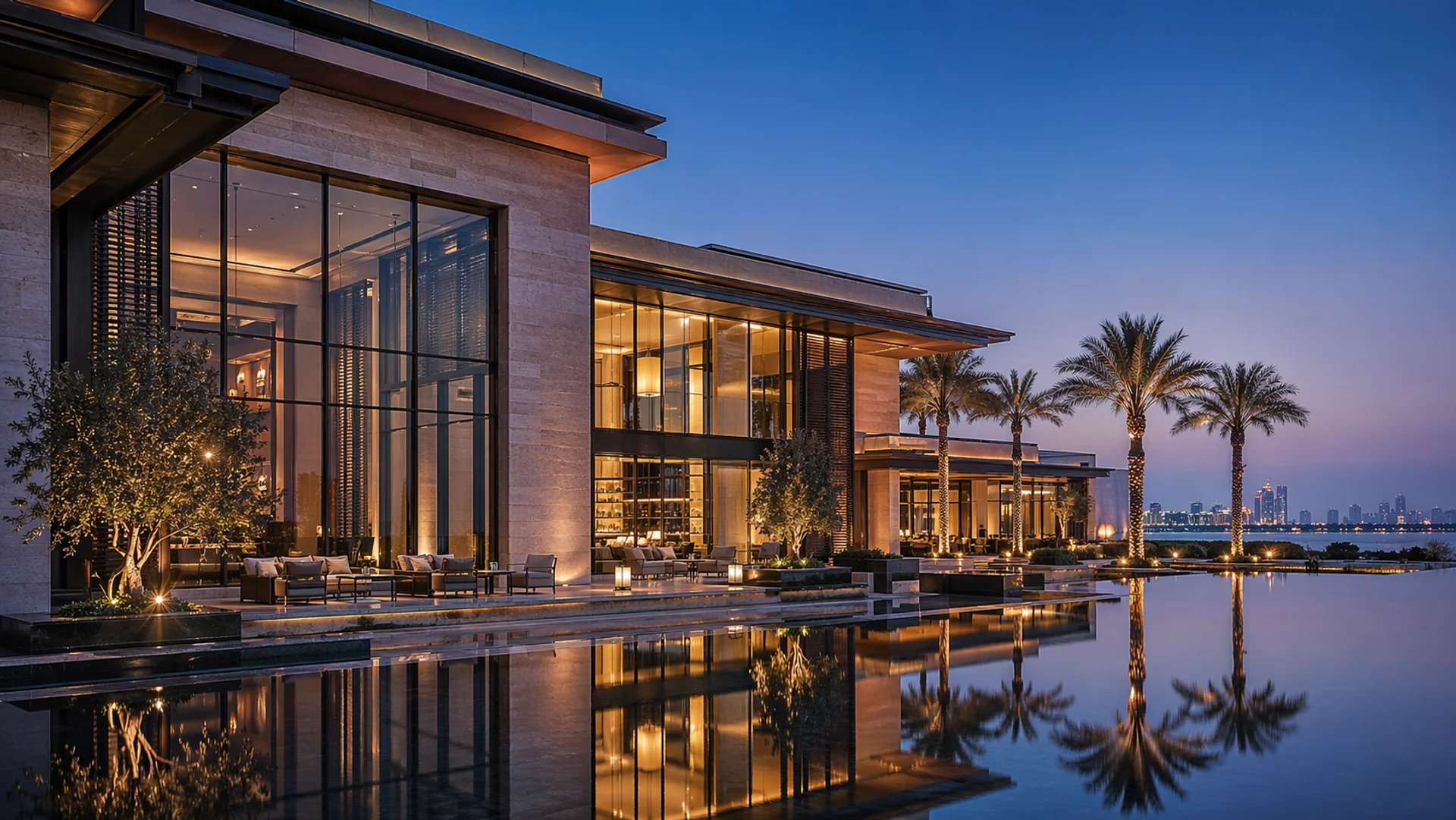
United Arab Emirates · Middle East
Custom Bali Furniture for Dubai
Produced in the workshop in Kerobokan, Bali, and shipped door to door by the workshop and its freight forwarders. Typical ocean transit of 10 to 14 days.
United Arab Emirates, Middle East
The market
The UAE is among the world's most active hotel development markets by volume, over 50,000 rooms in the pipeline in Dubai alone as of 2024. The design specification for upper-tier hotels and private residences has converged on natural materials (teak, stone, leather) as a reaction against the synthetic finishes that dominated regional hospitality interiors in the 2000s and 2010s. Bali is an established supply source for Middle Eastern hospitality buyers, with a typical transit time of 10 to 14 days from Benoa to Jebel Ali, one of the shortest routes among the destinations covered here and one of the most operationally straightforward.
Shipping & logistics
From Bali to Dubai, the practical details.
- Typical transit time
- 10 to 14 days
- Departure port
- Benoa, Bali
- Arrival port
- Jebel Ali Port, Dubai
- Standard incoterms
- CIF Jebel Ali
- Furniture import duty
- 0 to 1% under the Indonesia-UAE CEPA with a Form IUAE certificate of origin (0% from January 1, 2027); 5% GCC rate without it
- VAT / local tax
- 5% UAE VAT applies at import on the customs value plus duty; VAT-registered importers self-account for it and recover it
Direct weekly services from Benoa to Jebel Ali are available on several carrier networks. No Panama or Suez routing required, the Bali-to-Dubai route is entirely in the Indian Ocean and Arabian Sea. Jebel Ali is one of the world's largest container ports; clearance is efficient with the right customs broker in place.
Customs & import notes
The GCC unified tariff sets 5% of CIF value on furniture. Under the Indonesia-UAE CEPA, in force since September 1, 2023, Indonesian-origin furniture enters below that with a Form IUAE certificate of origin: 0% since entry into force on rattan seats and furniture, other wooden furniture (HS 9403.60.90), metal-frame seats and parts; 1% in 2026 and 0% from January 1, 2027 on wooden-frame seats, bamboo pieces and wooden office, kitchen and bedroom furniture, which phase down over five years. Which line applies is set by the UAE classification and confirmed with the freight forwarder before shipment; the certificate is issued through the Indonesian e-SKA system before or at shipment. 5% VAT is due at import on the customs value plus duty: non-registered importers pay it at clearance, VAT-registered importers account for it in their return and recover it. Indonesian timber leaves Bali under the SVLK timber legality system, Indonesia's export requirement for wood products; phytosanitary certificate may be required for natural fibre goods (rattan, bamboo). Abu Dhabi Customs and Dubai Customs have slightly different procedures, confirm which emirate applies to your delivery address.
Climate considerations
Hyper-arid, extreme heat (45°C+ in summer), intense UV, low humidity, dusty. Most outdoor furniture in the UAE is used in shaded or partially shaded conditions.
- Ambient temperature reaches 45 to 48°C in June to August, materials must not off-gas or delaminate at high heat
- UV index 11 to 12 during summer; direct sun exposure causes visible material degradation in most untreated materials
- Saharan dust (shamal winds) penetrates outdoor furniture finishes, smooth, closed-grain materials perform better
- Air conditioning is pervasive indoors, rapid temperature differentials between indoor AC environments and outdoor heat can stress furniture joints over time
Recommended materials for Dubai
A-Grade Teak (indoor & shaded outdoor)
Teak performs well in Dubai's conditions for shaded outdoor applications. For direct outdoor exposure in summer (pool decks, terraces), heat-stable teak oil finishes are recommended rather than lacquer, which can bubble at sustained temperatures above 60°C (common for surfaces in direct UAE sun). For indoor use, teak requires no special treatment.
Volcanic Stone (Paras), indoor
The primary application for Paras stone in Dubai projects is interior: statement dining tables, coffee tables, bathroom basins, reception desk elements. The material's heat absorption makes direct outdoor sun exposure uncomfortable for seated use in summer. For indoor feature pieces, stone is ideal, it suits AC environments and requires minimal maintenance.
Reclaimed Teak (statement pieces)
Dubai's premium residential and hotel market has a strong appetite for reclaimed teak statement pieces: large dining tables, custom media units, feature shelving. The material's provenance story (colonial-era Indonesian structures) and visible character markings are valued as authenticity markers in a market otherwise defined by new construction.
Why Balinese furniture works for the UAE
The case for Bali sourcing in the UAE market is partly aesthetic and partly operational. On the aesthetic side, the shift in Dubai’s premium interiors toward natural materials, teak, stone, leather, means that Bali’s craft output is increasingly aligned with what developers, interior designers and high-net-worth buyers are specifying. On the operational side, the Bali-to-Dubai route is the fastest among the destinations covered here: typically 10 to 14 days transit, no complex canal routing, efficient port infrastructure at both ends.
The UAE’s duty on Indonesian furniture is also among the lowest of the destinations covered here: 0 to 1% under the Indonesia-UAE CEPA with a certificate of origin, 5% under the GCC tariff without it. For a furniture order with a production value of $150,000, the import duty is at most $1,500 with the certificate, against the 25% to 35% duty applied in Mexico since 2026 or the 30% on most wooden furniture in Mauritius. Combined with a 5% import VAT that a VAT-registered business recovers, the UAE is one of the most cost-competitive destinations for international sourcing.
The short transit time also means that the UAE is practical for projects on a defined schedule. The workshop’s production typically runs 8 to 10 weeks in Bali, followed by approximately 14 days of sea transit to Jebel Ali.
What a typical UAE hospitality project would include
Illustrative example. A UAE hospitality or residential project would typically take one of three shapes. A hotel commission (200 to 800 keys at the Atlantis, Burj Al Arab, Bvlgari, One&Only One Za’abeel, Armani Hotel, Four Seasons Jumeirah, or Raffles The Palm scale) would usually involve standardised bedroom FF&E across all keys, lobby and lounge interiors, restaurant and bar fit-outs, spa interiors, and pool-deck pieces, often coordinated through international FF&E procurement firms with detailed specification packages. A penthouse or branded residence commission (3 to 10 bedrooms in Downtown, Palm Jumeirah, Emirates Hills, District One, Tilal Al Ghaf, Jumeirah Bay Island, or Bulgari Residences) would carry tighter design language and a smaller container scope per unit. A standalone villa commission (6 to 15 bedrooms) would typically span 2 to 4 × 40ft HC for full property fit-outs.
Furniture considerations for UAE climate
Specify finishes that hold up at 45 to 50°C ambient and 60+°C surface temperatures. UAE summer heat (June to September) drives outdoor surface temperatures well above the comfort range of standard furniture finishes. Lacquer-based finishes can soften, blister, or off-gas at sustained surface temperatures above 60°C, common for any piece in direct summer sun. Heat-stable teak oil, sealed joinery, and finishes specified for high-temperature stability are durable defaults; standard interior-spec lacquers transferred to outdoor placement typically fail in the first summer.
Plan finishes for UV index 11 to 12 across the longest exposure window in the destination network. UAE UV runs intense across roughly 9 months of the year, with the December peak still significant. Untreated rattan and unsealed natural fibres bleach and degrade within a single year of direct exposure; UV-stabilised finishes plus shaded placement protocols are paired specifications rather than independent choices. Indoor-only pieces in climate-controlled environments are far less exposed and can use standard interior specifications.
Account for sand and dust ingress in piece geometry. Saharan dust events (shamal winds) drive fine particulate into outdoor furniture finishes and joinery seams, materially harder to remove from textured or relief-detailed surfaces than from smooth ones. Smooth, closed-grain finishes outperform deeply textured upholstery and carved-relief panels for cleaning frequency. Factor maintenance protocol into the material brief at design stage.
Buyer checklist for UAE projects
- Plan installation outside the June-to-September summer where the schedule allows. October to May offers steadier ambient temperatures and humane conditions for installation crews; summer install work is operationally and physically demanding.
- Coordinate Jebel Ali Port clearance with your customs broker before container loading. Jebel Ali handles efficient processing and the broker network is well-established.
- For branded residences and pre-spec’d FF&E packages, verify the developer’s contractual specifications before committing material choices. Branded residence commissions typically carry developer-mandated FF&E packages that constrain the design brief.
- Plan against shamal sand events for pieces in storage or staging. Outdoor warehousing during shamal events drives fine particulate into uncovered finishes; covered staging is the durable default.
- Differentiate climate-controlled interior and outdoor specifications in the brief. Interior pieces can use standard finishes while outdoor placement requires heat-stable and UV-stabilised specifications. Misallocating spec at design stage drives early-life failures.
- Confirm final-mile vehicle access for villa and residence projects in gated communities. Several developments (Emirates Hills, District One, Jumeirah Bay Island) have access controls and dimensional restrictions for delivery vehicles.
Questions
Frequently asked questions
How long does it take to get custom furniture from Bali to Dubai?
Typically 12 to 20 weeks door to door depending on destination, including 8 to 10 weeks of production in Bali. These are the workshop's typical lead times, not an Ubud Atelier commitment. Containers typically take 10 to 14 days from Benoa to Dubai's Jebel Ali port, with no Panama or Suez routing.
What import duty applies to wooden furniture shipped from Bali to Dubai?
With a Form IUAE certificate of origin under the Indonesia-UAE CEPA, duty is 0% on rattan furniture and other wooden furniture (HS 9403.60.90), and 1% in 2026, 0% from January 1, 2027, on wooden-frame seats, bamboo and wooden bedroom furniture. Without it, Dubai applies the 5% GCC rate on CIF value.
Is VAT due on furniture imported into Dubai, and at what rate?
Yes. The UAE charges 5% VAT at import on the customs value plus duty. Non-registered importers pay it at clearance in Dubai; VAT-registered importers account for it in their return and recover it. With the CEPA certificate, duty and VAT together come to 5% to 6.05% of the customs value.
Which documents are needed to import furniture from Indonesia into Dubai?
The CEPA duty rates require a Form IUAE certificate of origin, issued through the Indonesian e-SKA system before or at shipment. Wood products leave Indonesia under the SVLK timber legality system, Indonesia's export requirement, and a phytosanitary certificate may be required for rattan and bamboo. A commercial invoice and packing list complete the file for Jebel Ali.
Who takes care of shipping and customs clearance from Bali to Dubai?
The workshop and its freight forwarder. The workshop's freight forwarder works with customs brokers at Jebel Ali, and HS classification is confirmed with the freight forwarder before each shipment leaves Bali. Jebel Ali serves Dubai and the whole UAE. Ubud Atelier introduces the project to the workshop and relays information to the client.
Is solid teak suitable for outdoor furniture in Dubai?
Yes, in shaded outdoor settings. Teak's natural oils keep it stable without chemical treatment, and heat-stable teak oil finishes suit Dubai better than lacquer, which can bubble above 60°C. Left untreated it weathers to a silver-grey; teak oil keeps its golden tone. Paras stone and reclaimed teak suit Dubai interiors.
What is the minimum project size for a hotel or villa in Dubai?
Hospitality projects in Dubai, from a boutique hotel to a branded residence, start from €25,000. A private residence, such as a villa on Palm Jumeirah, starts from €10,000. As an illustrative example, a full standalone villa fit-out would typically span 2 to 4 × 40ft HC containers.
Figures checked: September 2026
Have a project in Dubai?
Share the scope, timeline and destination. Ubud Atelier comes back with the workshop's capacity and lead time within 48 hours.