Portugal · Atlantic Europe
Custom Bali Furniture for Comporta
Produced in the workshop in Kerobokan, Bali, and shipped door to door by the workshop and its freight forwarders. Typical ocean transit of 28 to 34 days.
Portugal, Atlantic Europe
The market
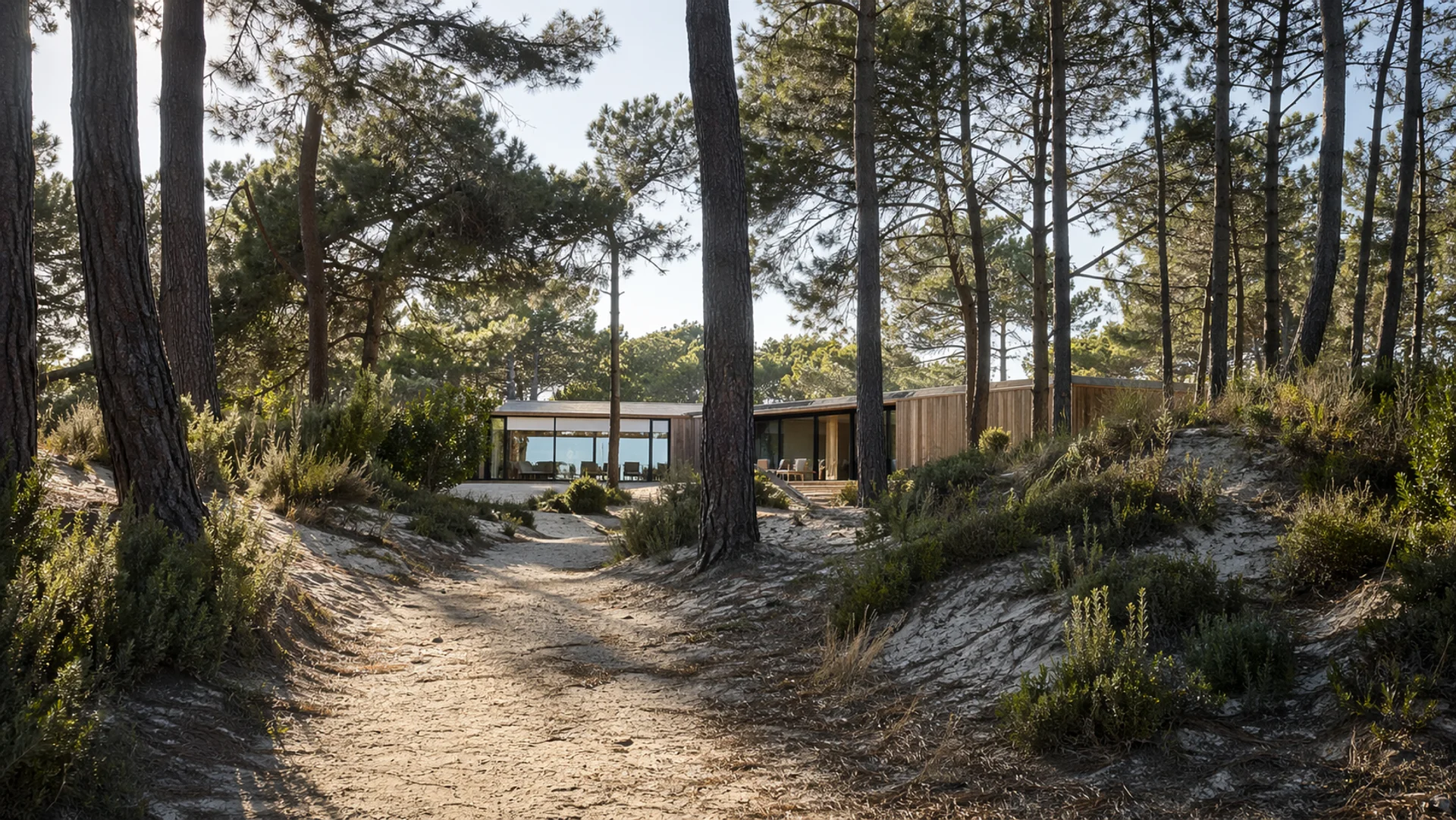
Comporta has emerged as one of Europe's most closely watched luxury property markets. Located 90 km south of Lisbon on the Alentejo coast, the area's landscape, cork oak forest, rice paddies, Atlantic dunes, has attracted a buyer profile that is simultaneously high-spending and explicitly sustainability-conscious. The interior aesthetic is minimal and natural: reclaimed timber, natural textiles, rush matting, stone. Bali's craft tradition is unusually well-matched to this brief, particularly in its capacity to provide FSC-certified and reclaimed timber options with verifiable provenance documentation.
Shipping & logistics
From Bali to Comporta, the practical details.
- Typical transit time
- 28 to 34 days
- Departure port
- Benoa, Bali
- Arrival port
- Port of Setúbal or Lisbon (Alcântara)
- Standard incoterms
- CIF Setúbal
- Furniture import duty
- 0% on most solid wood furniture (standard EU rates); rattan and bamboo categories up to 5.6%, confirmed by HS classification before shipment
- VAT / local tax
- 23% Portuguese IVA applies on duty-inclusive value
Standard routing via Singapore or Port Klang, Suez Canal, to Setúbal (which is closer to Comporta and handles container freight) or Lisbon. Setúbal is 40 km from Comporta by road; Lisbon is 90 km. Final trucking to Comporta properties is straightforward on good roads. No island logistics complexity.
Customs & import notes
Furniture imported from Indonesia enters the EU at standard EU rates determined by HS classification. Most solid wood furniture under chapter 94 (HS 9403.60 and neighbouring lines) enters at 0% duty; rattan and bamboo categories (HS 9403.82, 9403.83) can carry up to 5.6%. HS classification is confirmed before each shipment. The EU-Indonesia trade agreement (CEPA) is expected to remove remaining duties on Indonesian furniture once in force; the agreement was concluded in September 2025 and is not yet signed, and its entry into force is targeted for January 1, 2027. Wooden furniture from Indonesia needs a FLEGT licence, issued on the Indonesian SVLK timber legality system; rattan and bamboo pieces are outside the scheme. From December 30, 2026, the EU Deforestation Regulation also applies to wooden furniture: the operator placing it on the EU market files a due diligence statement with the geolocation of the plots where the wood grew. FSC chain-of-custody documentation is particularly valued in the Comporta market given the high proportion of sustainability-conscious buyers. Portuguese customs clearance at Setúbal or Lisbon typically 4 to 8 working days.
Climate considerations
Atlantic Mediterranean, mild temperatures, moderate humidity, rain November to March. More forgiving than eastern Mediterranean for outdoor furniture. Inland properties have less salt exposure than coastal.
- Atlantic humidity in autumn and winter is higher than Mediterranean equivalents, timber needs good sealing for outdoor year-round storage
- Atlantic storms November to February; furniture should be secured or stored during storm periods
- UV is lower than Mediterranean (index 7 to 8 in summer), rattan without UV coating has longer outdoor viability than in Mykonos or Ibiza
- Cork dust and pollen from surrounding cork oak forest can accumulate on textured surfaces, factor cleaning into maintenance planning
Recommended materials for Comporta
Reclaimed Teak
The primary recommendation for Comporta projects. Reclaimed teak's sustainability credentials, zero new-harvest impact, embodied carbon from a century-old structure, directly align with the market's buyer values. The material's aged character also matches the area's aesthetic of imperfect, honest materials. FSC and SVLK documentation available.
FSC Bamboo
Comporta's eco-conscious market is receptive to bamboo as a building and furniture material. Used for ceiling structures, pendant lights, decorative screens. Treated bamboo performs well in Atlantic humidity. The 3 to 5 year regeneration cycle vs 30+ years for teak is a compelling sustainability argument for properties seeking green certification.
Natural Rattan
Atlantic conditions are more forgiving for rattan than Mediterranean ones, lower UV, lower summer temperatures. Rattan without UV coating typically remains viable for covered outdoor use in Comporta for 10 to 15 years. The material's natural, handmade aesthetic resonates strongly with the target buyer demographic.
Why Balinese furniture works for Comporta
The alignment between Comporta’s design brief and Bali’s craft output is unusually strong, particularly on the sustainability axis. Where most sourcing markets prioritise aesthetics and logistics, Comporta’s buyer profile adds a third requirement: verifiable material provenance. FSC certification, SVLK timber legality, reclaimed materials documentation, these are not marketing assets in Comporta. They are purchasing criteria.
The documentation infrastructure is in place. FSC chain-of-custody certificates, SVLK declarations and zero-harvest reclaimed teak documentation are produced as standard for all Comporta-bound orders, without surcharge.
The aesthetic match is also direct. Comporta’s interior language, raw timber, natural textiles, honest materials, is exactly the vocabulary that Balinese craft has been producing for hospitality clients for three decades. The only difference is that a Comporta buyer in 2025 is likely to request the material provenance certificate alongside the mood board, and the workshop can provide both.
Portugal’s Atlantic coast also offers one operational advantage over Mediterranean destinations: the climate’s relative mildness means furniture specifications can be slightly relaxed. Rattan without UV coating typically has a viable outdoor lifespan of 10 to 15 years in Comporta’s conditions, compared to 2 to 3 years in Mykonos without treatment. This reduces the specification cost for projects where UV coating would otherwise be a mandatory addition.
What a typical Comporta hospitality project would include
Illustrative example. Comporta projects reflect the area’s emerging boutique status and sustainability-conscious buyer profile. A boutique hotel commission in the Sublime Comporta or Quinta da Comporta tier (20 to 40 keys) would typically include bedroom FF&E across all rooms, restaurant interiors specified in reclaimed and FSC-certified materials, and outdoor pieces for terraces and pool decks. A private villa commission (4 to 10 bedrooms, often architect-designed with strong material narrative) would include indoor dining and lounge, full bedroom sets, and shaded outdoor pieces, with sustainability documentation requested for nearly every material category. Beach-house orders tend to be smaller but emphasise weathered, honest finishes that match the Comporta visual identity.
Furniture considerations for Comporta climate
Build for Atlantic salt fog, which is more aggressive than Mediterranean salt air. Comporta’s exposure to onshore Atlantic winds carries salt deeper inland than typical Mediterranean coastal exposure, and the November to March storm season delivers sustained salt fog rather than intermittent salt spray. Specify lacquered brass throughout, marine-grade stainless steel hinges, and avoid mild steel and unplated iron entirely on outdoor or coastal pieces.
Lean into darker timber tones rather than the Mediterranean silver-grey default. Comporta’s lower UV (peak index 7 to 8 versus 9 to 10 in Mykonos or Sicily) means teak weathers more slowly and less uniformly. Designers and owners typically prefer pre-oiled darker tones, reclaimed teak’s deeper character, or stained finishes that align with the visual identity of the area. Fully untreated teak typically takes 24 to 30 months to weather to silver in Comporta versus 12 to 18 months in the Mediterranean.
Plan for higher humidity than Mediterranean equivalents, especially in autumn and winter. Atlantic humidity routinely exceeds 80% from October to March, driving moisture cycles that loosen unsealed joinery faster than in Mediterranean destinations. Specify sealed joinery, moisture-resistant adhesives, and pre-shipping humidity acclimatisation for any indoor wood pieces. The additional production step is small, the post-delivery trouble it avoids is significant.
Buyer checklist for Comporta projects
- Choose Lisbon or Setúbal arrival based on carrier availability and final-mile distance. Setúbal is 40 km from Comporta and avoids Lisbon urban traffic; Lisbon is 90 km but offers more frequent carrier options and faster customs clearance windows.
- For beachfront properties, confirm whether the access road can support a standard delivery vehicle or requires a 4x4 truck. Sandy and unpaved approach roads to several beach houses are not navigable by conventional logistics trucks.
- Verify Comporta nature reserve regulations before delivering any element that requires beachfront installation (decks, beachfront shelters, anchored furniture). The area sits inside Reserva Natural do Estuário do Sado, and beachfront work needs prior approval.
- Build in a 1 to 2 week buffer to identify and confirm a local installer. Comporta’s growing destination status means the qualified installer pool is still smaller than in Lisbon or Mediterranean destinations.
- Request FSC chain-of-custody and SVLK documentation upfront in your brief. The Comporta market expects sustainability documentation as a purchasing criterion, not as an optional add-on.
Questions
Frequently asked questions
How long does it take to get custom furniture from Bali to Comporta?
Typically 12 to 20 weeks door to door depending on destination, including 8 to 10 weeks of production in the workshop in Bali. These are the workshop's typical lead times, not a commitment from Ubud Atelier. Containers from Benoa typically reach Setúbal in 28 to 34 days, then 40 km by road to Comporta, with no island leg.
What import duty applies to wooden furniture in Comporta, Portugal?
Wooden furniture shipped to Comporta, including seats with wooden frames, enters at 0% customs duty. Rattan and bamboo furniture carries 5.6%, cut to 0% for Indonesian origin under the EU GSP until December 31, 2026; Indonesia leaves the GSP on January 1, 2027. These are standard EU rates, set by HS classification.
Is VAT due on furniture imported into Comporta, and at what rate?
Yes. Portugal charges 23% import VAT (IVA) on furniture shipped to Comporta, calculated on the customs value plus duty plus transport to the place of destination in the EU. A VAT-registered business recovers it through its return; monthly filers can settle it in the return rather than at the border.
Which documents are needed to import furniture from Indonesia into Portugal for Comporta?
Wooden furniture for Comporta needs a FLEGT licence, issued on the Indonesian SVLK timber legality system; rattan and bamboo pieces are outside the scheme. From December 30, 2026, the EU Deforestation Regulation also applies to wooden furniture: the operator placing it on the EU market files a due diligence statement with the geolocation of the plots where the wood grew.
Who handles shipping and customs clearance from Bali to Comporta?
The workshop and its freight forwarder. The forwarder works with customs brokers at Setúbal or Lisbon, and final trucking to Comporta follows clearance. HS classification is confirmed with the freight forwarder before each shipment leaves Bali. Ubud Atelier's role is to introduce the project to the workshop and relay information to the client.
Is solid teak suitable for a hotel or villa in Comporta's Atlantic climate?
Yes. A-grade plantation teak and reclaimed teak suit Comporta: natural oils and silica resist moisture and Atlantic salt air without chemical treatment. With lower UV, untreated teak typically takes 24 to 30 months to weather to silver-grey; teak oil keeps the golden tone. Natural rattan typically remains viable for 10 to 15 years in covered outdoor use.
What is the minimum project size for a hotel or villa in Comporta?
Hospitality projects in Comporta, from a boutique hotel to a beach house rental, start from €25,000. A private residence, such as an owner's own villa, starts from €10,000.
Which port serves Comporta, Setúbal or Lisbon?
Setúbal is the closer container port for Comporta, 40 km away by road and clear of Lisbon traffic; Lisbon (Alcântara), 90 km away, offers more frequent carrier options. Final trucking to Comporta properties runs on good roads, though some beach houses on sandy approach roads need a 4x4 truck.
Figures checked: September 2026
Have a project in Comporta?
Share the scope, timeline and destination. Ubud Atelier comes back with the workshop's capacity and lead time within 48 hours.