
Vietnam · Southeast Asia
Custom Bali Furniture for Hoi An & Da Nang
Produced in the workshop in Kerobokan, Bali, and shipped door to door by the workshop and its freight forwarders. Typical ocean transit of 6 to 10 days.
Vietnam, Southeast Asia
The market
Vietnam's Central Coast is among Southeast Asia's fastest-growing luxury hospitality markets. Da Nang's beach corridor (Non Nuoc, My Khe, Bac My An) and the Hoi An ancient town hospitality cluster together host approximately 35 luxury properties, including Four Seasons The Nam Hai (Vietnam's flagship), InterContinental Da Nang, Banyan Tree Lang Co, and emerging boutique villa developments. The pipeline is expanding at approximately 15% annually, driven by the post-COVID Asian travel rebound and increased international FF&E procurement budgets. Furniture specification has shifted toward natural materials and indoor-outdoor design, aligned with the regional aesthetic and Hoi An's UNESCO heritage character.
Shipping & logistics
From Bali to Hoi An & Da Nang, the practical details.
- Typical transit time
- 6 to 10 days
- Departure port
- Benoa, Bali
- Arrival port
- Da Nang Port (Tien Sa Terminal)
- Standard incoterms
- CIF Da Nang
- Furniture import duty
- 0% under ASEAN AFTA (with Form D Certificate of Origin)
- VAT / local tax
- 8% to 10% Vietnam VAT applies on duty-inclusive value (currently 8% reduced rate through 2026)
Direct services from Benoa to Da Nang are available via Singapore or Manila transshipment hubs. Indonesia and Vietnam are both ASEAN members, eligible for zero-duty treatment under ATIGA provided Form D Certificate of Origin accompanies the shipment. Da Nang Port (Tien Sa Terminal) is Vietnam's primary central coast container port and handles efficient processing for hospitality cargo. From Da Nang, road transit to Hoi An (45 minutes) and inland Hue or My Son properties (2 hours) is straightforward.
Customs & import notes
Vietnam customs duty for furniture sourced from Indonesia is 0% under the ASEAN Free Trade Area, conditional on Form D Certificate of Origin. Vietnam also cut its standard MFN rates on headings 94.01 (seats) and 94.03 (other furniture) from 20% and 25% to 0% under Decree 73/2025/ND-CP, effective 31 March 2025, so furniture currently enters at 0% on the MFN schedule as well. Form D is still filed, because it is the ATIGA route and because the MFN cut sits in a decree that can be amended. Standard VAT is 10% but currently reduced to 8% for most categories through end of 2026. Additional fees may include port handling and customs declaration charges (approximately 0.5% of CIF). Indonesian timber leaves Bali under the SVLK timber legality system, Indonesia's export requirement for wood products. Vietnam customs operates an electronic system (VNACCS portal) and processing is generally efficient with experienced Da Nang-based brokers.
Climate considerations
Tropical with two seasons (dry March to August 25 to 35°C, wet September to February 18 to 28°C). Coastal salt air is moderate; typhoon season September to November may delay shipments.
- Tropical, two seasons (dry March to August 25 to 35°C, wet September to February 18 to 28°C)
- UV index 10 to 12 in summer, 7 to 9 in winter
- Coastal salt-air exposure is moderate, well-cured Indonesian teak handles it without chemical preservation
- Typhoon season September to November may delay shipments, factor an indicative 5 to 10 day buffer into project timelines
Recommended materials for Hoi An & Da Nang
A-Grade Plantation Teak (full outdoor)
Teak handles Vietnam Central Coast conditions excellently. The South China Sea exposure combines salt air, monsoon rain (September to January), and intense UV (10 to 12 index summer). A-grade plantation teak's natural properties typically deliver 25 to 30 year performance without chemical preservation. Pool decks, beachfront loungers, F&B outdoor terraces.
Reclaimed Teak (statement pieces)
Reclaimed teak's heritage character aligns with Hoi An's UNESCO heritage architectural language. Custom dining tables, lobby installations, library shelving for boutique villa renovations and resort F&B environments. The colonial-era Indonesian timber provenance complements Hoi An's own Chinese-French colonial architectural heritage.
Natural Rattan (covered outdoor & indoor)
Rattan thrives in Vietnam's climate when kept under cover. Vietnamese hospitality has a strong rattan craft tradition, but Indonesian rattan sources can deliver larger volumes and consistent quality for hotel-scale FF&E projects.
Why Balinese furniture works for Hoi An & Da Nang
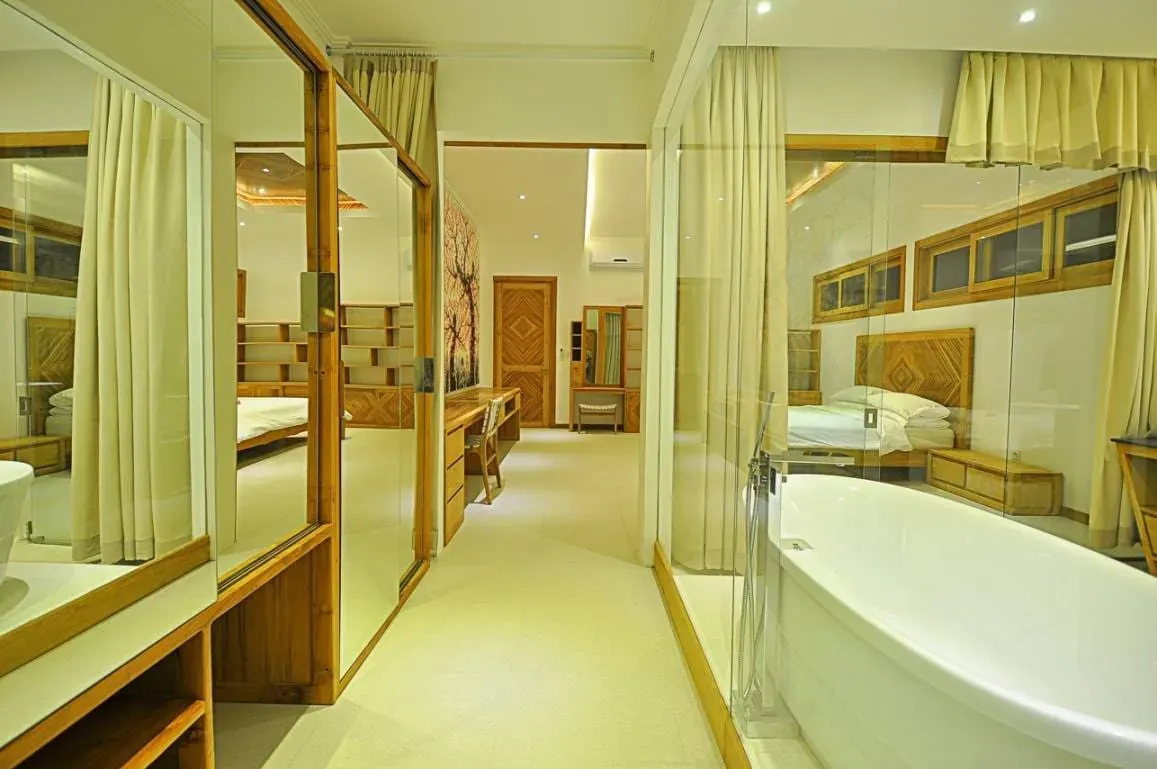
Hoi An’s hospitality design vocabulary draws from two distinct sources, the UNESCO heritage architecture of the old town (carved hardwoods, traditional tile, Chinese-French colonial layering) and the contemporary beachfront resort segment along An Bang and Cua Dai (clean-line tropical-modern, indoor-outdoor pavilion). Bali’s craft tradition speaks both vocabularies at hospitality scale, reclaimed teak and carved detail aligned with the heritage palette, structural plantation teak and woven rattan aligned with the beach-resort palette.
The operational case sits alongside the aesthetic. A boutique heritage hotel in the old town or a beachfront resort commission would typically need to coordinate FF&E across multiple Vietnamese and regional suppliers to assemble a full property fit-out. A single Bali workshop with full-scope capability covers both heritage and contemporary specifications under one production roof, with the piece-to-piece consistency that multi-source procurement struggles to achieve at hospitality scale.
What a typical Hoi An & Da Nang hospitality project would include
Illustrative example. A Hoi An or Da Nang hospitality project would typically take one of two distinct shapes. A beachfront resort commission on An Bang or Cua Dai (60 to 120 keys at the Four Seasons The Nam Hai, Banyan Tree Lang Co, Anantara, Maia, Naman, or Furama scale) would usually involve repeated bedroom FF&E across all keys, restaurant and bar fit-outs, spa interiors, and pool-deck and beach pieces, with marine-grade specifications for typhoon and salt-loaded outdoor placements. A boutique heritage commission in Hoi An old town (10 to 30 keys, often a heritage townhouse conversion) would carry tighter conservation constraints around piece dimensions, material visibility, and old-town vehicle access, and would typically scope a smaller container (single 20ft) per project.
Furniture considerations for Hoi An climate
Engineer beachfront outdoor pieces against the September-to-November typhoon season. The Vietnamese central coast lies on an active typhoon track, with major events possible annually between September and November. A-grade plantation teak with mortise-and-tenon joinery and brass hardware is the usual outdoor specification for exposed positions. Outdoor pieces specified for permanent terrace installation should be heavy enough to anchor or designed for rapid disassembly and indoor storage during typhoon watches.
Plan ground-floor pieces in the old town against annual flood risk. Hoi An’s old town sits on the Thu Bon river floodplain and experiences annual flooding events during the wet season (September to January), with several days of standing water in lower-elevation streets typical. Heritage-property fit-outs should plan ground-floor piece elevation, removable feet, and storage protocols at briefing stage rather than discover the constraint after delivery. Stone-base pieces and elevated-leg furniture are durable defaults for vulnerable ground-floor zones.
Match material vocabulary to the heritage conservation rules. The Hoi An old town carries UNESCO conservation requirements that may restrict modern high-gloss finishes, polished metal accents, or contemporary lacquer treatments on visible interior pieces of heritage townhouse conversions. Reclaimed teak, hand-rubbed oil finishes, and traditional carved-detail joinery generally pass review more easily than contemporary materials. The brief should set the conservation alignment at design stage.
Buyer checklist for Hoi An & Da Nang projects
- Time outdoor and beachfront installation outside the September-to-November typhoon window where the schedule allows. May to August offers steadier conditions for pool-deck, beach, and exposed-terrace work.
- For old town heritage projects, plan around vehicle restrictions in pedestrian-zone streets. Several old-town streets are closed to vehicles during daytime hours and deliveries must be scheduled outside the restricted windows.
- Coordinate Da Nang Port clearance and the 45-minute road haul to Hoi An with your freight forwarder. Da Nang serves the entire central coast and is operationally efficient.
- For heritage townhouse conversions in the old town, plan ground-floor piece elevation and storage protocols around annual flood events. Lower-elevation streets carry recurring wet-season flood risk.
- Verify UNESCO conservation requirements with the local heritage authority before committing to any visible material spec on heritage-listed buildings. Conservation review can typically add 4 to 8 weeks to the project timeline.
- For typhoon-window projects, factor an indicative 5 to 10 days of additional buffer into hard opening dates to absorb storm-related shipping or road-haul delays.
Questions
Frequently asked questions
How long does it take to get custom furniture from Bali to Hoi An and Da Nang?
Typically 12 to 20 weeks door to door depending on destination, including 8 to 10 weeks of production in Bali. These are the workshop's typical lead times, not an Ubud Atelier commitment. Ocean transit to Da Nang typically takes 6 to 10 days, then 45 minutes by road to Hoi An; typhoons can add an indicative 5 to 10 days.
What import duty applies to wooden furniture shipped from Bali to Hoi An and Da Nang?
Furniture enters Vietnam at 0% customs duty under the ASEAN Free Trade Area with a Form D certificate of origin. Decree 73/2025/ND-CP also cut the MFN rates on headings 94.01 and 94.03 from 20% and 25% to 0%, effective 31 March 2025, so furniture for Hoi An and Da Nang currently enters at 0% on both routes.
Is VAT due on furniture imported into Vietnam for Hoi An and Da Nang?
Yes. Vietnam's standard VAT is 10%, currently reduced to 8% for most categories through end of 2026, charged on the duty-inclusive value. With duty at 0%, Vietnamese customs cost for Hoi An and Da Nang is essentially the 8% VAT, plus port handling and customs declaration charges of approximately 0.5% of CIF.
Which documents are needed to import furniture from Indonesia into Hoi An and Da Nang?
Zero duty under ATIGA requires a Form D certificate of origin, and it is still filed for Hoi An and Da Nang shipments because the MFN cut sits in a decree that can be amended. The wood also leaves Indonesia under the SVLK timber legality system, Indonesia's export requirement for wood products. Declarations go through the VNACCS electronic portal.
Who takes care of shipping and customs clearance from Bali to Hoi An and Da Nang?
The workshop and its freight forwarder. The workshop's freight forwarder works with customs brokers at Da Nang Port (Tien Sa Terminal), and HS classification is confirmed with the freight forwarder before each shipment leaves Bali. It also covers the road haul to Hoi An. Ubud Atelier introduces the project to the workshop and relays information to the client.
Is solid teak suitable for a beachfront resort in Hoi An or Da Nang?
Yes. A-grade plantation teak's natural oils and silica resist the Central Coast's salt air and monsoon rain without chemical treatment, and typically deliver 25 to 30 years of performance. Left untreated it weathers to a silver-grey; teak oil keeps its golden tone. Reclaimed teak suits Hoi An's heritage interiors; rattan suits covered spaces.
What is the minimum project size for a hotel or villa in Hoi An or Da Nang?
Hospitality projects in Hoi An and Da Nang, from a heritage townhouse hotel to a beachfront resort, start from €25,000. A private residence, such as a villa on the Da Nang coast, starts from €10,000.
Figures checked: September 2026
Have a project in Hoi An & Da Nang?
Share the scope, timeline and destination. Ubud Atelier comes back with the workshop's capacity and lead time within 48 hours.